
 Illustrative concept
Three ways to use solar power
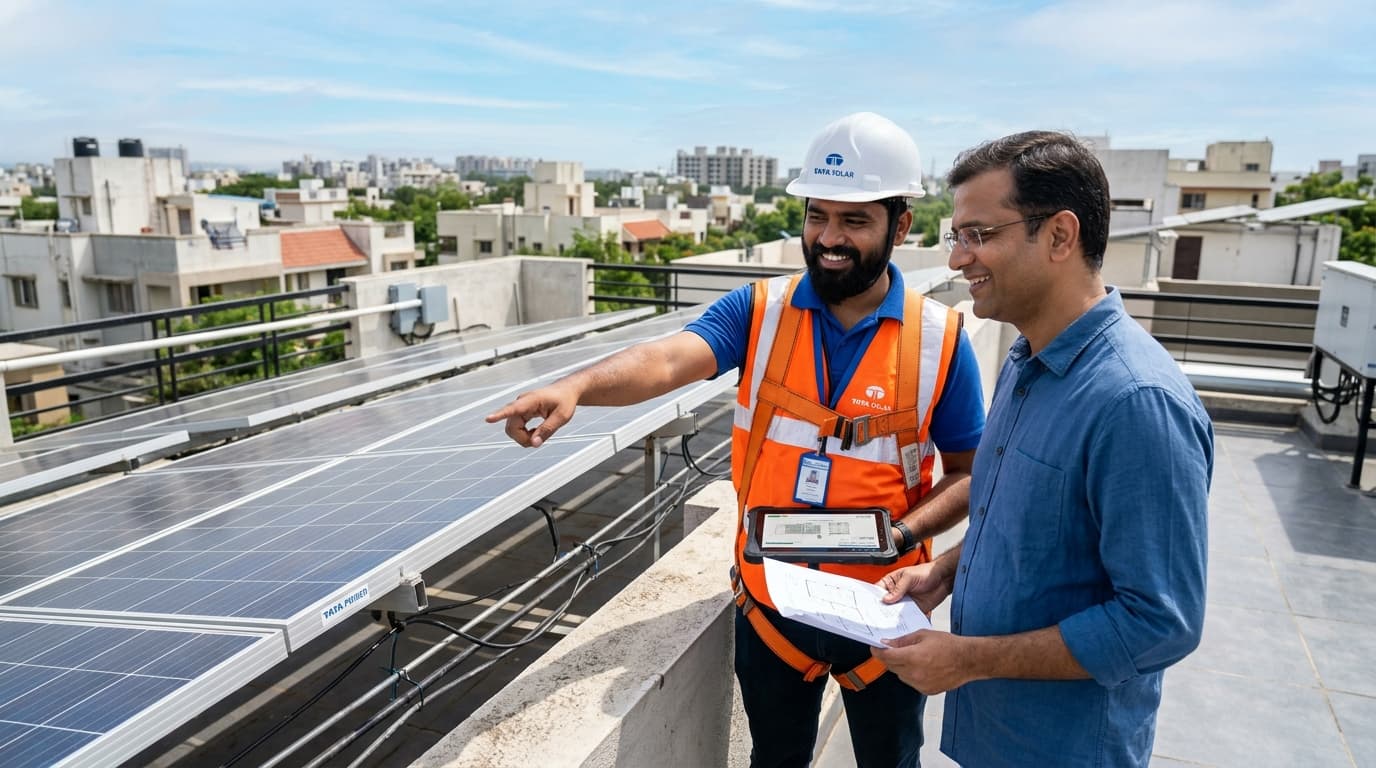
Every solar system starts the same way: panels convert sunlight into electricity, and an inverter turns it into power your property can use. What changes between system types is what happens to that power, and what happens when the sun goes down.
On-grid solar
An on-grid system works alongside your existing electricity connection. During the day your property uses solar power first, and when solar is not enough the grid supplies the difference. With net metering, energy exchanged with the grid is recorded on your meter.
On-grid is usually the simplest option for properties with a dependable grid connection. Most on-grid systems switch off during a power cut for safety, so on their own they do not provide backup.
Off-grid solar
An off-grid system is not connected to the grid. Panels charge batteries through the inverter, and stored energy powers the property when the sun is down. It suits locations where grid supply is unavailable or unreliable, and the battery bank has to be sized for the loads you want to run.
Hybrid solar
A hybrid system combines both. It stays connected to the grid and also charges batteries, so solar powers the property by day and stored energy takes over during outages.
Questions that decide the right system
- How dependable is the grid supply at your property?
- Do you need backup during power cuts, and for which appliances?
- How much electricity do you use each month? Your bill is the best starting point.
- How much shade-free roof or ground space is available?
Next step
Pawan Putra Solar installs on-grid, off-grid and hybrid systems and supports net metering, solar cleaning and AMC. Share your monthly bill and property type through our solar consultation form and our team will recommend a system for your requirement.